FDM 3D Printing (Fused Deposition Modeling)

The most recognized form of 3D printing — durable, scalable, and material-versatile. When your project demands strength, FDM delivers reliable results across a wide range of applications and materials.

What Is FDM 3D Printing?

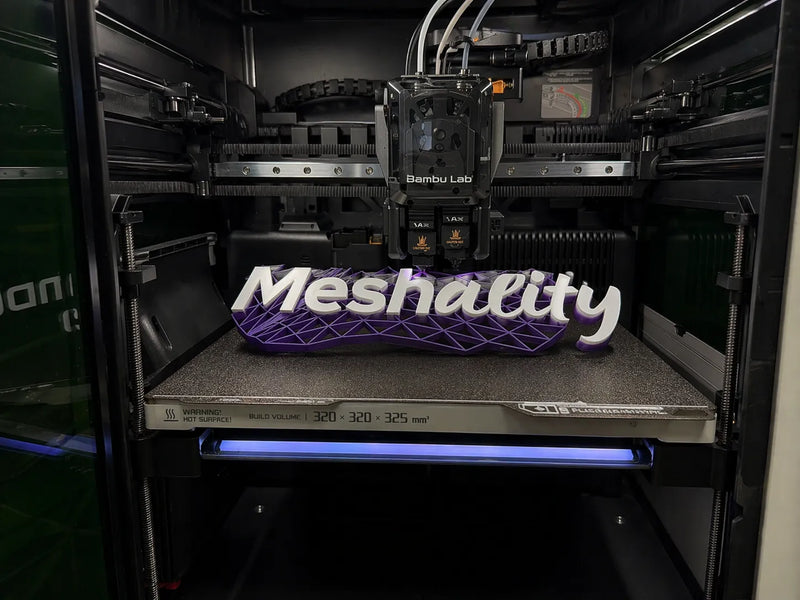
FDM works by feeding a thermoplastic filament through a heated nozzle, melting it, and depositing it in precise paths across the build platform. Each layer fuses to the one below it as it cools, building the part from the bottom up. Support structures are added where needed and removed after printing. The result is a solid, durable part ready for functional testing, assembly, and real-world use — straight off the machine with minimal post-processing.

What is FDM 3D Printing Good For?

The most recognized form of 3D printing for a reason. FDM is durable, scalable, and material-versatile — ideal for rapid prototypes, functional parts, jigs, fixtures, enclosures, and brackets. If your project needs to withstand mechanical stress, heat, or chemical exposure, FDM's wide material library has the right solution. It's the go-to process when strength and cost-efficiency matter most.

How FDM 3D Printing Works

FDM works by feeding filament through a heated nozzle, melting it, and depositing it in precise paths across the build platform. Each layer fuses to the one below it as it cools, building the part from the bottom up. Support structures are added where needed and removed after printing. The result is a solid, durable part ready for functional testing and real-world use — straight off the machine with minimal post-processing.

FDM 3D Printing FAQs

Everything you need to know about our FDM printing service.

We print in a wide range of thermoplastics including PLA, PETG, ABS, ASA, Nylon, TPU, Polycarbonate, and carbon fiber or glass fiber reinforced composites. The right material depends on your application — whether you need rigidity, flexibility, heat resistance, or chemical stability. Not sure what's right? Tell us what your part needs to do and we'll recommend the best option.

It depends on the material. Standard PLA is best for visual and low-stress applications. Engineering materials like ABS, ASA, Nylon, and Polycarbonate handle mechanical stress, elevated temperatures, and chemical exposure significantly better. For demanding applications we'll always recommend the appropriate material for your specific conditions.

Yes — FDM is widely used for functional prototypes, jigs, fixtures, enclosures, brackets, and tooling aids. For structural or load-bearing end-use applications, material selection is critical. Our team will advise on the right material and design approach to ensure your part performs as required.

FDM typically delivers dimensional accuracy within ±0.2 to ±0.5 mm depending on the geometry, material, and print orientation. For most functional prototype and assembly applications this is more than sufficient. If your application requires tighter tolerances, we'll discuss whether design adjustments or an alternative process would be a better fit.

As a general guideline, minimum wall thickness of 1.2 mm and feature sizes above 1 mm produce the most reliable results. Thinner walls or smaller features can be printed but may require design adjustments. Our team reviews every file before printing and will flag any potential issues before the job runs.

Both options work. If you have a print-ready file, we'll review it for printability and flag any issues before we run. If you need guidance on wall thickness, support strategy, orientation, or material selection, our team can advise before submission. No experience required — just bring your project.

FDM parts can be sanded, primed, painted, and clear coated to significantly improve surface finish and appearance. Support removal and cleanup are included as standard. For functional parts requiring smooth mating surfaces or tight fits, we can discuss additional finishing options based on your requirements.

Turnaround depends on the size, complexity, and quantity of your order. FDM is one of the faster processes for getting functional parts quickly. We'll provide a clear timeline with your quote so you know exactly what to expect before committing to anything.

The main cost factors are material type, part volume, print time, support material usage, and any finishing requirements. FDM is generally one of the most cost-effective manufacturing processes for functional parts, especially for low to mid volume runs where tooling would otherwise be required.

We accept STL, OBJ, 3MF, and STEP formats. If your file needs repair, orientation guidance, or prep work before printing, our team will handle that before the job runs. If you don't have a print-ready file at all, we can help with that too — just reach out.

Ready to Put FDM to Work?

Strong, scalable, and material-versatile — FDM is built for projects that need to perform. Tell us what you need and we'll take it from there.