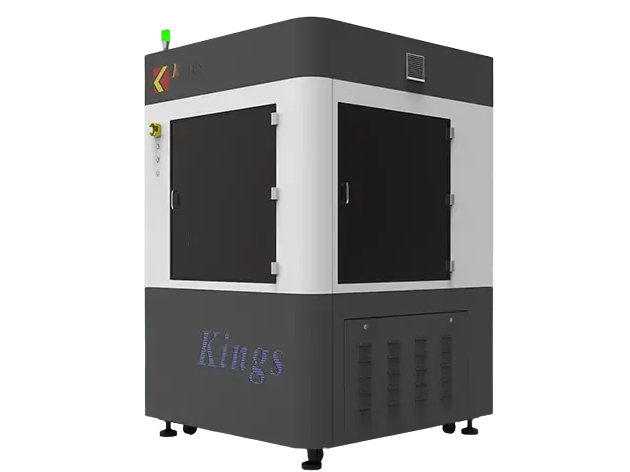
SLA 3D Printing (Stereolithography)

Exceptional surface finish. Tight tolerances. Fine feature detail. Our SLA printing delivers precision that few other processes can match — ideal for prototypes, concept models, and applications where accuracy and appearance are everything.

The SLA Printing Process

SLA is one of the most precise and versatile 3D printing technologies available today. Using a UV laser to cure liquid photopolymer resin layer by layer, SLA produces parts with exceptional surface finish, tight tolerances, and fine feature detail — making it ideal for prototypes, master patterns, and end-use components where appearance and accuracy matter most.
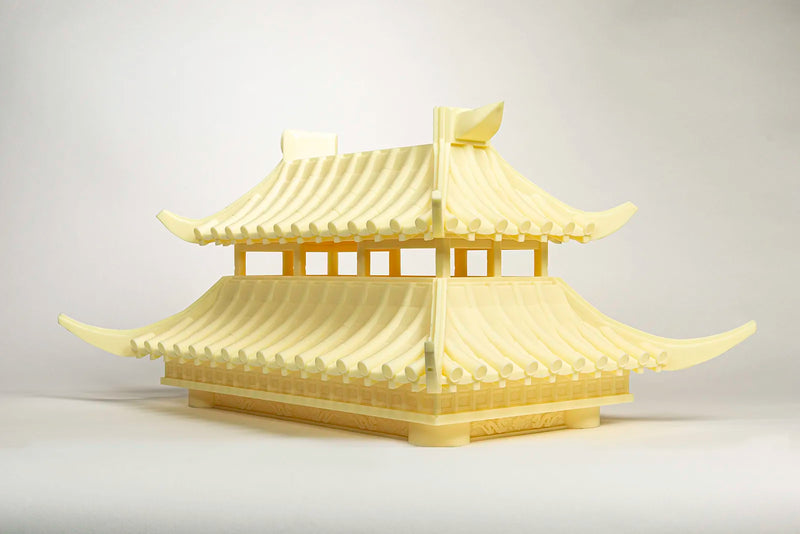
What SLA Is Best Used For?

Visual prototypes, concept models, investment casting patterns, medical devices, and complex geometries with smooth surface requirements.

How SLA 3D Printing Works

SLA uses a focused UV laser to selectively cure liquid photopolymer resin into solid form, one layer at a time. The build platform is submerged in a vat of resin, and the laser traces each cross-section of the part onto the surface, hardening the material with precision. Once a layer is complete, the platform moves down, exposing a fresh layer of resin for the next pass.

Parts are then removed from the platform, washed to remove excess resin, and placed in a UV cure station to achieve their final material strength and stability. The result is exceptionally smooth surface finish, sharp feature detail, and tight dimensional accuracy — straight from the printer and ready for finishing or end use.

SLA 3D Printing FAQs

Everything you need to know about our SLA printing service.

SLA delivers dimensional accuracy within ±0.1 mm, with layer heights as fine as 25 microns. For most prototype and production applications, that means injection-mold-level surface quality and tight enough tolerances for fit-and-form testing, assembly checks, and concept validation — without committing to tooling.

SLA leads in surface finish, detail resolution, and dimensional accuracy. FDM is better suited for large, durable structural parts where surface quality is less critical. SLS excels at high-volume, functional parts without supports. If your priority is a smooth, precise part — especially one that needs to look good or test against tight specs — SLA is usually the right call.

Yes. With engineering and high-performance resins, SLA parts are deployed in production settings — particularly for short-run manufacturing, custom-fit components, jigs, fixtures, and medical devices. For high-impact or high-temperature structural applications at volume, a powder-bed process may be a better fit.

We accept STL, STEP, STP, OBJ, and 3MF. STL is the most common for 3D printing submissions. If your file is in another format or needs prep work (repair, hollowing, orientation guidance), our team can assist before the job goes to print.

Yes. SLA produces isotropic, watertight parts by default — a key advantage over FDM. This makes it well-suited for fluid flow testing, enclosure validation, and any application where sealing or containment matters.

Indoor parts away from direct sunlight remain stable for years. UV exposure over time can cause standard resins to yellow and become more brittle. For parts that will live outdoors or under UV lighting, we recommend a UV-blocking clear coat as a post-processing step, which significantly extends part life.

Both options work. If you have production-ready files, we'll review them for printability and flag any issues before we run. If you need design guidance — wall thickness minimums, clearances for assemblies, hollowing recommendations — our team can walk through your geometry and advise before submission.

Yes — SLA's per-part cost is competitive for small batches, and there's no tooling investment required. It's a strong fit for runs where injection molding would require expensive upfront tooling but the volumes don't justify that cost yet. Businesses use it to validate designs, produce market-ready samples, and bridge to full production.

We offer a range of SLA resins including standard, flexible, tough, castable, and engineering-grade options. Material selection depends on your application — whether you need rigidity, impact resistance, flexibility, or biocompatibility. Not sure what's right for your project? We'll recommend the best option based on your requirements.

Absolutely. SLA's smooth surface makes it one of the best processes for post-print finishing. Parts can be sanded, primed, painted, and clear coated to achieve virtually any appearance requirement. This makes SLA a popular choice for presentation models, marketing samples, and any application where the final look matters.

Ready to Print with Precision?

When surface finish and accuracy matter most, SLA delivers. Tell us about your project and we'll take it from there.